

 Health and Inclusion
Environmental sustainability, social inclusion and rights
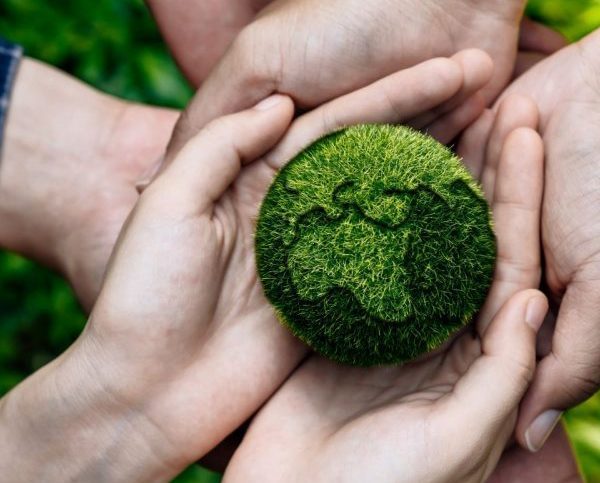
The environmental, social and economic challenges of our time are enormous. Everyone must feel compelled to do their part. Public actors, businesses and the Third Sector are increasingly involved in promoting a development that is sustainable from a social, environmental and economic point of view. One example is what is happening in our welfare system.
by the editorial staff at ‘Percorsi di secondo welfare’
The social, economic and environmental challenges facing our societies have become increasingly complex. Over the last few decades, we have all slowly begun to realise that responding to these challenges, exacerbated by the 2008 economic crisis and the pandemic, is not the exclusive responsibility of the public administration. Everyone can play their part. Concepts such as “second welfare” and “sustainable development” have become part of the public debate, raising awareness of traditional actors – such as philanthropic organisations and the Third Sector – but also of new players such as companies and social partners. The corporate world is increasingly committed to initiatives aimed at guaranteeing integral and sustainable well-being for the communities in which they operate in various capacities.
Social sustainability: a paradigm for interpreting today’s challenges
The current social, economic and environmental issues are sometimes discussed in public debate as if they had emerged in recent years, almost suddenly. However, these dynamics have much older roots, which are firmly anchored in the way in which our productive and social systems have been designed since the end of World War II.
A good example is the welfare state. Our social protection system was designed on the basis of social, demographic, economic and political-institutional conditions which began to change drastically in the 1970s. The failure to recalibrate welfare towards new needs and social risks has resulted in a distortion of the system that has not yet been corrected. And so different needs that have emerged over the decades due to social, economic and family changes still do not have adequate answers: the reconciliation between work and private life, working poverty, educational poverty, non-self-sufficiency (to give just a few examples)[1].
A similar dynamic can be found with regard to economic and environmental challenges: while the context changed drastically – also due to human intervention –public institutions have been slow to introduce appropriate measures. For the most part, climate change has just entered the public agenda, at a time when we are no longer talking about the damage that this will cause in the coming years and decades, but instead are confronted daily with the effects that it has already begun to produce.
In the face of the enormous complexity of these challenges, what answers can be prepared? What resources can be activated? What can be learned from past mistakes to avoid repeating them?
Sharing challenges, resources and responsibilities
Problems related to the environment, the economy and social inclusion have become more complex. Parallel to this dynamic, and partly due to it, the belief has spread that it is necessary to involve the widest possible set of actors to promote an optimisation of the resources available and to better face these challenges.
Here, too, we can take an example from welfare: for decades public institutions have shown a growing interest in the mobilisation of resources – human, economic and instrumental – of private actors in the preparation of social projects. Since 2016, for example, there has been a constant consolidation of corporate welfare: through the introduction of a privileged tax regime, the State pushes companies to engage directly in welfare measures[2]. Similarly, over the last two decades, philanthropic welfare has been progressively strengthened by changing its institutional structure, diversifying and consolidating its methods of intervention, and promoting the professionalisation of its human resources[3]. In recent years, local welfare initiatives, projects and measures aimed at the well-being of a community have also multiplied on national territory, starting from the shared reading of needs and aspirations, providing for numerous subjects (public and private actors, associations and private citizens) to be placed at the centre[4].
These are several examples of what is commonly referred to as “second welfare” or the set of social interventions that, together with those guaranteed by public institutions (“first” welfare), offer innovative responses to new and old needs and social risks that affect people and communities. The second welfare initiatives have four key characteristics: (1) the active involvement of market and third sector actor(2) the creation of effective and authentic partnerships partenariati between local actors (both private and public); (3) the pursuitof social innovation (i.e. the search for new or more effective services, products and models); and (4) a participatory and empowering perspective in which all actors are called to pool skills and resources (economic, human and instrumental).
The idea that so many different actors can and should contribute in some way to the promotion of well-being has strengthened in recent decades, in part due to cuts in public spending. In this sense, it is important to underline that increasing attention must be paid to the economic sustainability of initiatives, including through the aggregation of resources from different sources:national and local public policies, European tenders and funding, and private actors of the Third Sector and the Market that increasingly engage in projects with a social impact.
Il coinvolgimento di attori non tradizionali nelle iniziative di welfare non risponde però solo a una logica di ottimizzazione economica, ma si è affermato anche in conseguenza della convinzione che bisogni complessi richiedano risposte complesse con il coinvolgimento di ogni possibile attore. The paradigm of the second welfare can represent a key to effective intervention also to respond to economic and environmental challenges.
Adopting an integrated approach
In order to effectively address the challenges we face, in addition to involving a wide range of actors, it is necessary to adopt an integrated, global and preventive approach.
The UN 2030 Agenda was built with this in mind, with the aim of meeting the “needs of the present generation without compromising the ability of future generations to achieve their own”[5]. To do this, the United Nations has identified 17 Sustainable Development Goals (SDGs) to be achieved by 2030, which aim to favour the inclusion of people, the sharing of prosperity, and economic development that benefits all communities. The approach behind the SDGs is integrated and interdisciplinary: in fact, in the Agenda, relationships are drawn between issues that appear to be separate, but which can be addressed more effectively in an integrated way. This is why the 2030 Agenda proposes a transversal reading of the many social, health, economic and environmental dimensions that all contribute together to our well-being. In particular, there are two assumptions on which it is based:
- that development can no longer be understood without also measuring the metric of sustainability. And vice versa: sustainability must not be conceived as a “ballast”, a weight that slows down development processes that would otherwise be much faster, more effective and more efficient;
- that the concept of sustainability is to be understood as equally applied to all areas of the strategy’s intervention. That is to say that environmental sustainability must go hand in hand with social and economic sustainability.
The integrated approach underlying the 2030 Agenda has been established in recent years, thanks in part to the programmatic and communicative effort carried out by the United Nations. Attention to sustainability has been strengthened in several areas, including the business world. Here, ESG (Environmental, Social, Governance) strategies in particular have begun to spread, which take into account not only the economic returns but also the environmental, social and governance impact of the company’s activity. This approach invites companies to measure, verify and direct their actions in terms of sustainability, too.
Adopting evaluation criteria in line with the principles of sustainability is therefore the first step for all public and private actors to constantly question their commitment to promote the development of this generation and also the next.
The Lottomatica Foundation’s contribution to the debate
In light of what has been briefly mentioned above, the reflections on sustainability in its entirety (and, consequently, on the different actors that can contribute to it) seem all the more valuable to adequately face the social, economic and environmental challenges of our time.
To contribute to this debate, the Lottomatica Foundation has launched a work of reflection involving Percorsi di secondo welfare, the workshop at the University of Milan which has been studying and narrating these dynamics for over a decade, paying particular attention to those concerning social policies. In the coming months the workshop’s working group will accompany the Foundation in the definition of a programmatic agenda that takes into account the themes of sustainability and, alongside more strictly research activities, will also propose some thematic insights such as the one you are reading.
The goal is to help understand how sustainable development can permeate, and in part already permeates, various sectors of our society and involves numerous public, private and non-profit actors. In this sense, in the coming months we will deepen their (sustainable) contribution in key areas such as sport, philanthropy, youth and gender policies, but also corporate welfare and diversity and inclusion approaches.
[1] For an in-depth analysis of welfare state developments, we recommend M. Ferrera (ed.), Le politiche sociali [Social Policies], Bologna, Il Mulino, 2019
[2] To learn more about the developments, critical issues and strengths of corporate welfare, we recommend Santoni V. (2021), Il welfare aziendale e contrattuale, tra sostenibilità e “filiera corta” [Corporate and contractual welfare, between sustainability and “short supply chain”], in Maino F. (ed.), [The return of the welfare state? Market, Third Sector and communities beyond the pandemic. Fifth Report on the second welfare 2021], , Turin, Giappichelli.
[3] For more information on the recent developments in the field of institutional philanthropy, we recommend reading Cibinel E. (2019), Dall’innovazione al cambiamento: una nuova sfida per le Fondazioni di origine bancaria [From innovation to change: a new challenge for foundations of banking origin], in Maino F. and Ferrera M. Fourth Report on the second welfare in Italy 2019, Turin, Giappichelli.
[4] To learn more on the evolution of local welfare and other forms of second welfare mentioned, we recommend reading Maino F. (ed), 2021, Il ritorno dello Stato sociale? Mercato, Terzo Settore e comunità oltre la pandemia. Quinto Rapporto sul secondo welfare 2021 [The return of the welfare state? Market, Third Sector and communities beyond the pandemic. Fifth Report on the second welfare 2021], , Turin, Giappichelli.
[5] For more information on the contents of the 2030 Agenda, please refer to the website for ASviS – Italian Alliance for Sustainable Development.