
 Culture and Local Areas
Censis Report | Women, work and sport in Italy
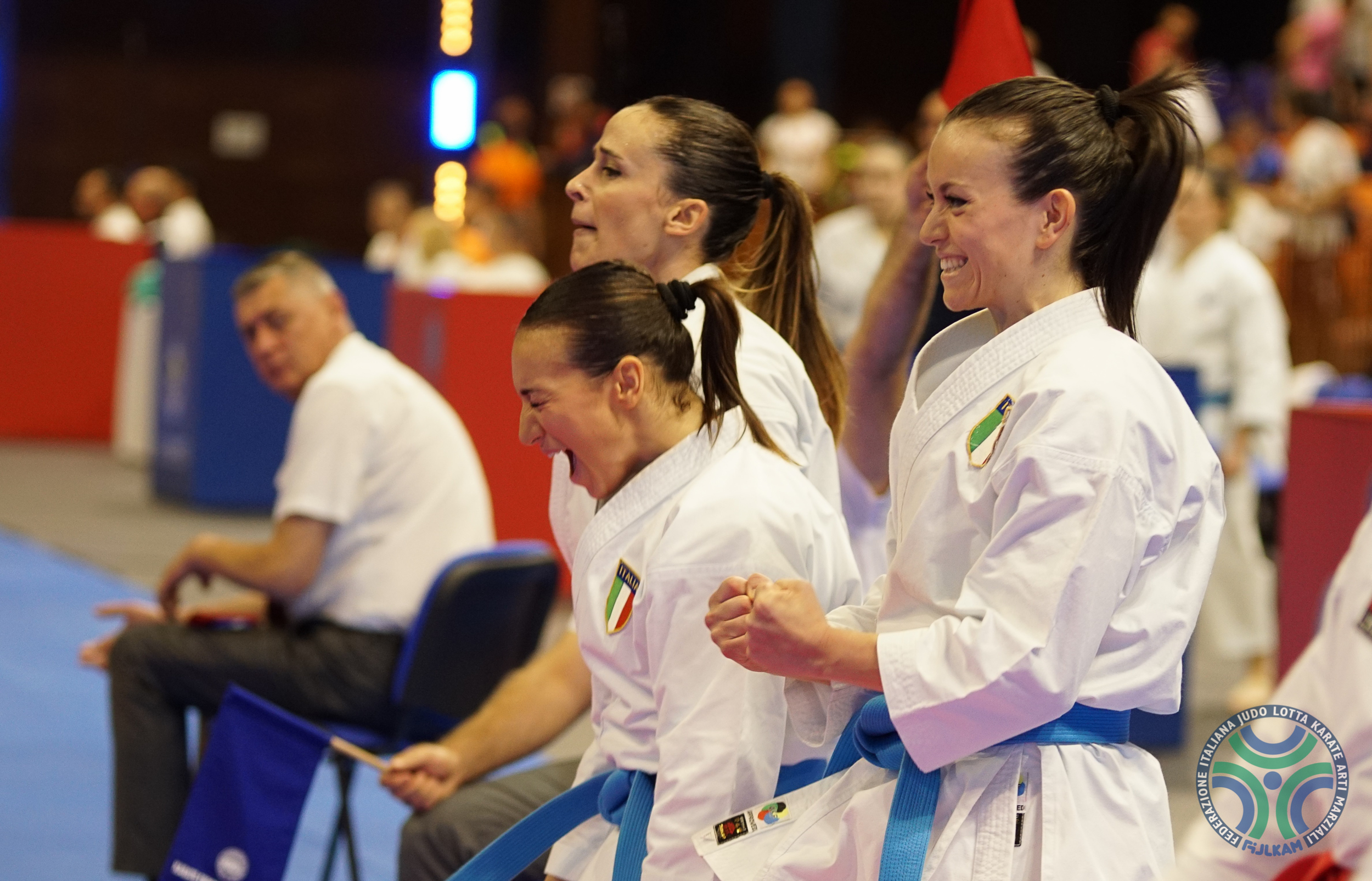
Below is the executive summary of the report entitled “Donne, lavoro e sport in Italia. Per la crescita dei territori e del Paese” [“Women, work and sport in Italy: For the growth of the regions and the country”], curated by Censis and presented on 7th June at the event held at the CONI Hall of Honour and organised by the Lottomatica Foundation. On the occasion of the initiative, the new project promoted by the Lottomatica Foundation and Fijlkam – the Italian Federation of Judo, Wrestling, Karate and Martial Arts – was also announced, which aims to promote the spread of women’s sports in some of the most disadvantaged areas of the country. Attached is the full report by Censis in downloadable PDF version.

Sport is a fundamental element of people’s lives because it represents their individual identity while enhancing psychophysical wellbeing, and it is a constitutive ingredient of modernity, because it stimulates positive behavioural patterns. The result is that those who practice sports live better and are better integrated into a more evolved society. Sport and work combine in the most advanced regions and represent vehicles for growth, for the region and for the women who live there.
In Italy, the number of women who practise sports stands at about 8 and a half million and women make up 43.3% of the total number of sportspeople. Considering that women make up 51.1% of the population, a gender gap persists in sport that has nonetheless been progressively declining in recent years, in which the number of female competitive athletes has grown above all.
29.2% of women over three years old practise at least one sport (twenty years ago it was 23.3%), and 6.5 million (21.8%) of these do so continuously (twenty years ago it was 15.7%). In addition to these, there are almost 9 million women, 30.2% of the total, who, although not practising sports, do engage in some physical activity, giving a total of about 17 and a half million Italian women, 59.4% of the total, who practise sports or another type of physical activity.
12 million women (40.6% of the total) are still excluded from this mass practice.
Sportswomen work harder and better than women who lead sedentary lives, get along better both with themselves and others, and adopt more modern and sustainable lifestyles. They are conscious of environmental issues, they are involved in digital life, and they read and participate in cultural events. 26.9% of sportswomen have a university degree and 49.8% are employed.
In the areas of the Centre-North of Italy, where more women play sports, a virtuous circle is created whereby the sport practised becomes itself a vehicle for emancipation and the gaps between men and women in other fields of social life, first of all work, are less sensitive.
The share of female practitioners stands at 36.3% of the total number of women over three years of age in the North East, 34.0% in the North West, 31.9% in the Centre and falls to 19.7% in the South and the islands. Regionally, it ranges from 50.4% of practitioners in Trentino-Alto Adige, to 13.4% in Calabria, preceded by Sicily (17.4%), Campania (17.7%) and Basilicata (17.9%).
The correlation between sports practice and employment is evident if you look at the regional ranking built based on the female employment rate, which almost coincides with that of females who do sport.
Against an average female employment rate of 51.1% in Italy, at the regional level it ranges from a maximum of 66.2% in Trentino-Alto Adige to a minimum of 30.5% in Sicily, preceded by Campania, where the female employment rate is 30.6%, and Calabria with 31.8%.
In the less developed regions, reduced sports practice is thus added to the other socio-economic disadvantages, with the risk that women remain increasingly distant from full inclusion and participation in social life.
Promoting women’s sport, and promoting it especially in the South, is not only necessary to overcome the gender gap that still exists between men and women in competitive practice, but it means leading more and more women into modernity through full social and economic inclusion, which is ensured primarily through qualified and well-paid work.
On the other hand, where the talent of women is not considered or is dismissed, the consequences weigh on their lives but also on the entire society, which, in addition to depriving itself of the ability to face a problem from different points of view, finds itself having to do without valuable resources for skills, competences and multitasking orientation.
For this reason, increasing the number of females who do sports is not only a matter of social justice, but also a matter of development and national interest.
Without women who work and without women who play sports, the country cannot grow, or in any case it grows less than it could.
To view the full report, click the link below: